
Accessible Extensions & Budget Friendly Homes
2020’s ‘Ask our Architects’ Feature, Ireland’s Homes, Interiors & Living Issue Oct 24
Readers of IHIL magazine were asked to send in questions they wanted 2020 Architects to answer. Here are the questions published in the September 2024 Issue.
This feature is ongoing, send any questions to IHIL to have them answered by us!
Accessible Extensions
How can I add an accessible bedroom and bathroom to the rear of my south-facing, semi-detached house (off the kitchen) without creating a shadow in the kitchen? Will a kitchen redesign be necessary? I want more than just a box added on and something sleek.
The most important thing when designing a home is the communication between the designer and the client. In this case, it would be important to understand how you use your kitchen. What time of day are you in this space, having a light filled kitchen when the house is empty is of little benefit.
Generally the times people are in their kitchens are the morning and afternoon/evening. For most people the mornings are very rushed and it is the evening family time that a beautiful light filled kitchen comes into its own. If this is true for you, then think how your kitchen can gain the western light rather than just the mid day southern light. Is there the possibility of putting new windows into a western facing wall to flood the kitchen with that afternoon light. You don’t have to be held to the usual shape or location of windows, be imaginative about their location and how they will cast light into the space. Using time as the starting point will naturally dictate the position of any extension to reduce its impact on the natural light.
Also consider the access from the existing kitchen into this extension. It is important for anyone using this new bathroom and even bedroom to feel that the very public kitchen space isn’t just behind a door. Try and create a small amount of separation between the new extension spaces and the kitchen while ensuring this separation space is also naturally lit and adds to the interest of the extension.
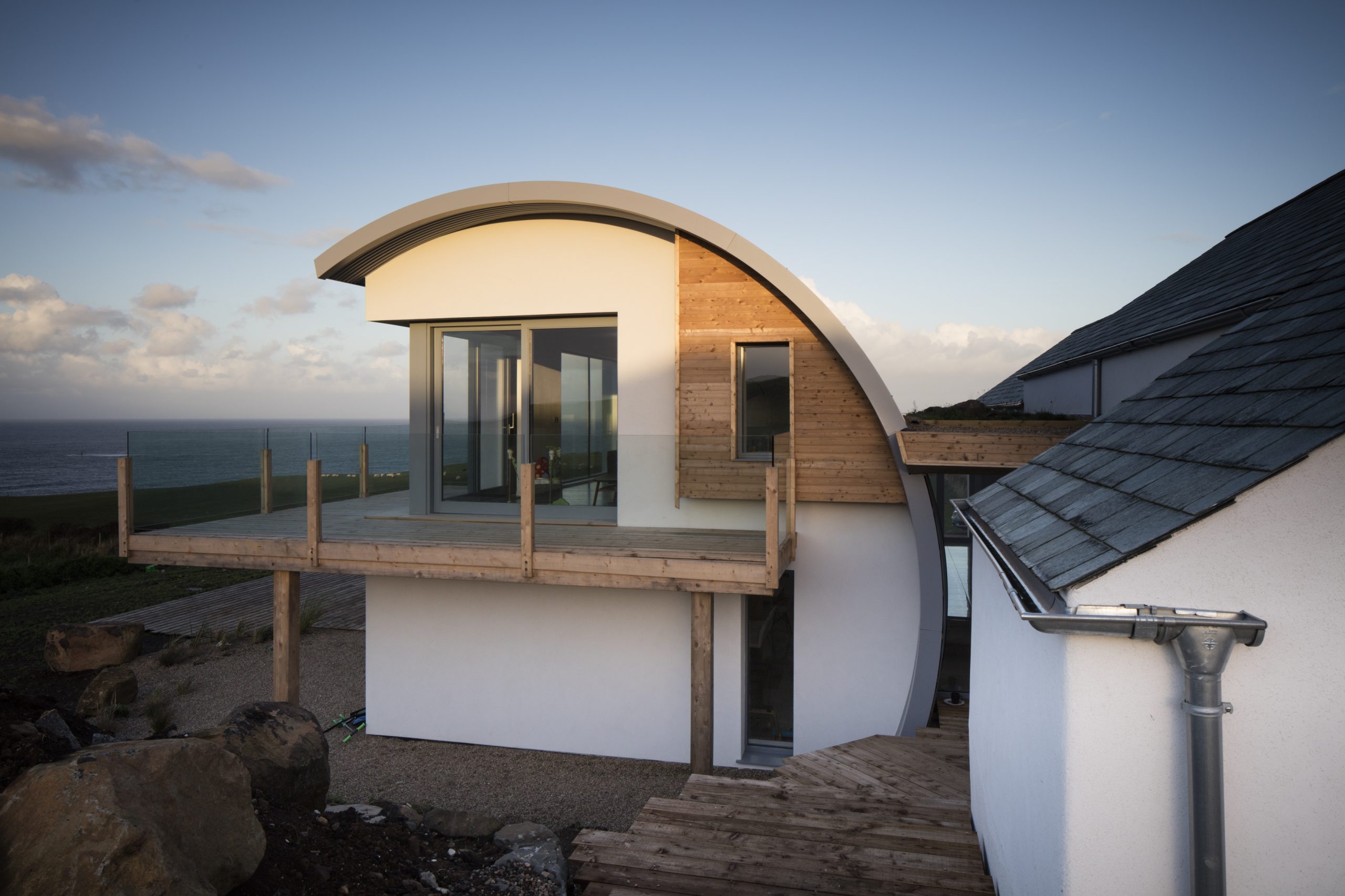
A simple box is the lowest cost way to design this but you are correct, it is hard to make a simple box interesting. It usually requires very fine detailing to elevate it which reduces the cost saving benefit of the shape. Depending on how well you have resolved the lighting you could think of a separation courtyard space that allows light into the kitchen and lifts the extension out of the norm. Apart from the materials the roof is often the easiest way to make a simple single storey extension interesting a sharp angled roof will often create a much sleeker, sharper looking design.
Budget Friendly Homes
How can we incorporate eco-friendly and sustainable materials into our home without significantly increasing the budget?
Eco friendly and sustainable don’t have to mean expensive but it isn’t sustainable or eco friendly to only add materials into a house for no reason. If you are working with an existing house where materials are coming to the end of their natural life, you could look to replace these materials with a natural or low embodied energy alternative. With an older house if you are doing work to the house, look to update the insulation and the airtightness. The Nearly Zero Energy Building standards we work to are a 25% improvement on even the 2011 regulations so unless your house is very new, it wont be sufficiently insulated.
With a new build it is much easier. If you want to reduce the running costs then complying with the NZEB regulations is the best way to make your house low energy and sustainable; however, as we build lower energy homes the percentage impact that embodied energy/carbon has on sustainability, is growing. Embodied carbon is the carbon footprint of a building before it is built, and encompasses the greenhouse gasses emitted during the construction process. As our energy network becomes greener and our houses require less energy to run then the largest factor of whether a home is sustainable will be the embodied energy. To reduce the embodied energy think natural materials, with little processing and made locally.
You can order full copies of past IHIL magazines here.