
2020’s ‘Ask our Architects’ Feature, Ireland’s Homes, Interiors & Living Issue Jan 25
Readers of IHIL magazine were asked to send in questions they wanted 2020 Architects to answer. Here is the question published in the January 2025 Issue.
I’m wondering what type house is best suited to a “quarry “ tile as opposed to polished (or Matte) porcelain. I am remodelling a mid century modern home in Florida and want a tile to run inside and outside with a seamless look out to a pool. I’m wondering if a quarry tile look is too cold.
Your question is very well timed as quarry tiles have started to come back into fashion. I expect you will see lots of examples of beautifully designed houses featuring quarry tiles over the next number of years so your interest in them now places you well ahead of the design trend. The question is also well timed because 2020 Architects have recently moved into our new studio space where we have used quarry tiles for our entrance and reception space. They sit with a beautiful contrast to the existing reclaimed floorboards from the original building. We have also started the design of a house in South Dakota, our second home design in North America and so for us, a question from Florida seems right.
Quarry tiles
While quarry tiles are having a design moment right now, this style will always be sufficiently niche to never appear overdone; I don’t think it’s popularity will risk the tile losing the essential characteristics that people love.
Most people recognise them as the small square red or terracotta tile from older house floors, especially high wear areas like the front entrance or back hall. They are generally produced through a semi-automated extrusion process, similar to bricks. This process gives them a non-uniform, irregular appearance that adds warmth and character to the tile. The typical colours draw from natural earthy tones of reds, browns, greys and blacks with red being the iconic and most prevalent quarry tile colour. They can be used internally and externally and have proved to provide a very robust and enduring finish.

Architecture Style
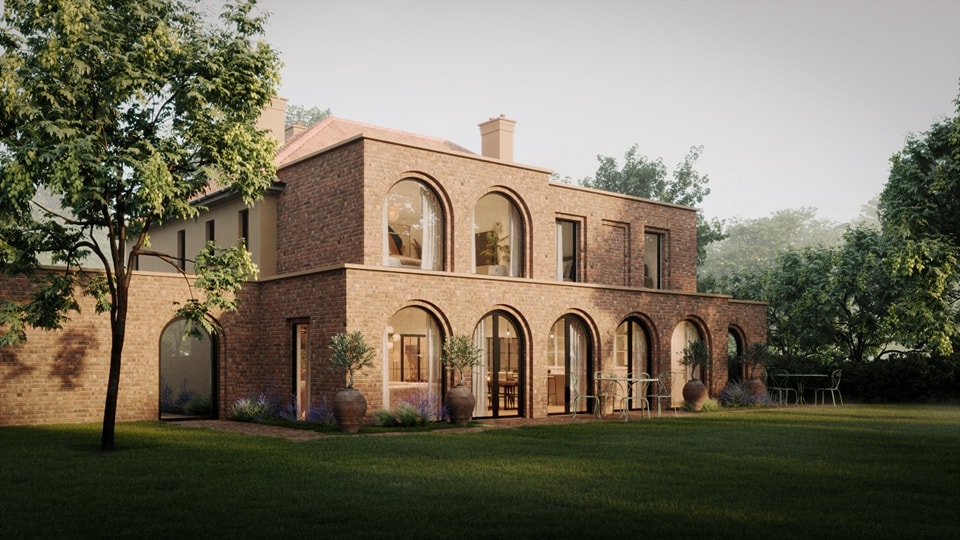
At 2020 Architects we genuinely love this practical little tile. They are a beautiful natural finish that works incredibly well with the majority of our soft modern design projects. As a practice, 2020 enjoy crafting beautiful modern architecture by breathing new life into traditional buildings or creating new homes that have the character and texture of a vernacular home. This style of architectural design, like the famous mid-century aesthetic, uses soft natural textures and considered detailing to create unique buildings that have a strong relation to the site they sit in. Modern home design, combining traditional craftmanship with a soft modern material pallet, is very similar to the mid-century tradition. It has swept away the starker elements of early modernism and we are now seeing a move away from the more basic modernist motifs that have been commonplace in-home design for the last two decades. Gone are the blank open spaces and the plain and non-descript sliding doors to be replaced with more complexity of plan and more thoughtful interaction between spaces.
Mid-Century Design
While we love the soft textured look quarry tiles can easily create, the tiles are not necessarily the ideal finish for all mid-century homes. Mid-century homes can be divided roughly into two different styles. An international style, which was heavily influenced by the early European modernist traditions of the Bauhaus. While less clinical, it was still design with little or no decoration, colour or texture. Or there is the more organic, natural mid-century style that most people are familiar with from American TV and movies. It is this more organic style with its use of natural materials such as wood, stone, brick and tile that would be a perfect setting for a quarry tile floor. If it is this more textured mid-century home you are refurbishing, then I would consider the tile and don’t feel it would create a clinical or cold feeling. Do consider however the surrounding materials; while mid-century design enjoyed the use of texture, too much can make a space feel busy and uncomfortable. It is the understanding of the difference between the beautiful mid-century style and the later 1970s extravagance which will dictate how successful or harmonious any new texture or material will work. Secondly you may consider using a different colour of tile or grout, for example, black quarry tiles with a grey grout can add a sense of luxury while retaining the warmth and earthy feel of the original material.
If you would like more specific advice on your build, please feel free to contact us directly!